Find Your Way into Fes: Where to Go, Stay, and Start
Use Bab Boujeloud as a starting point for budget-friendly medina food, then explore Fes el Bali’s historic landmarks, from Bou Inania Madrasa to Chouara Tannery.
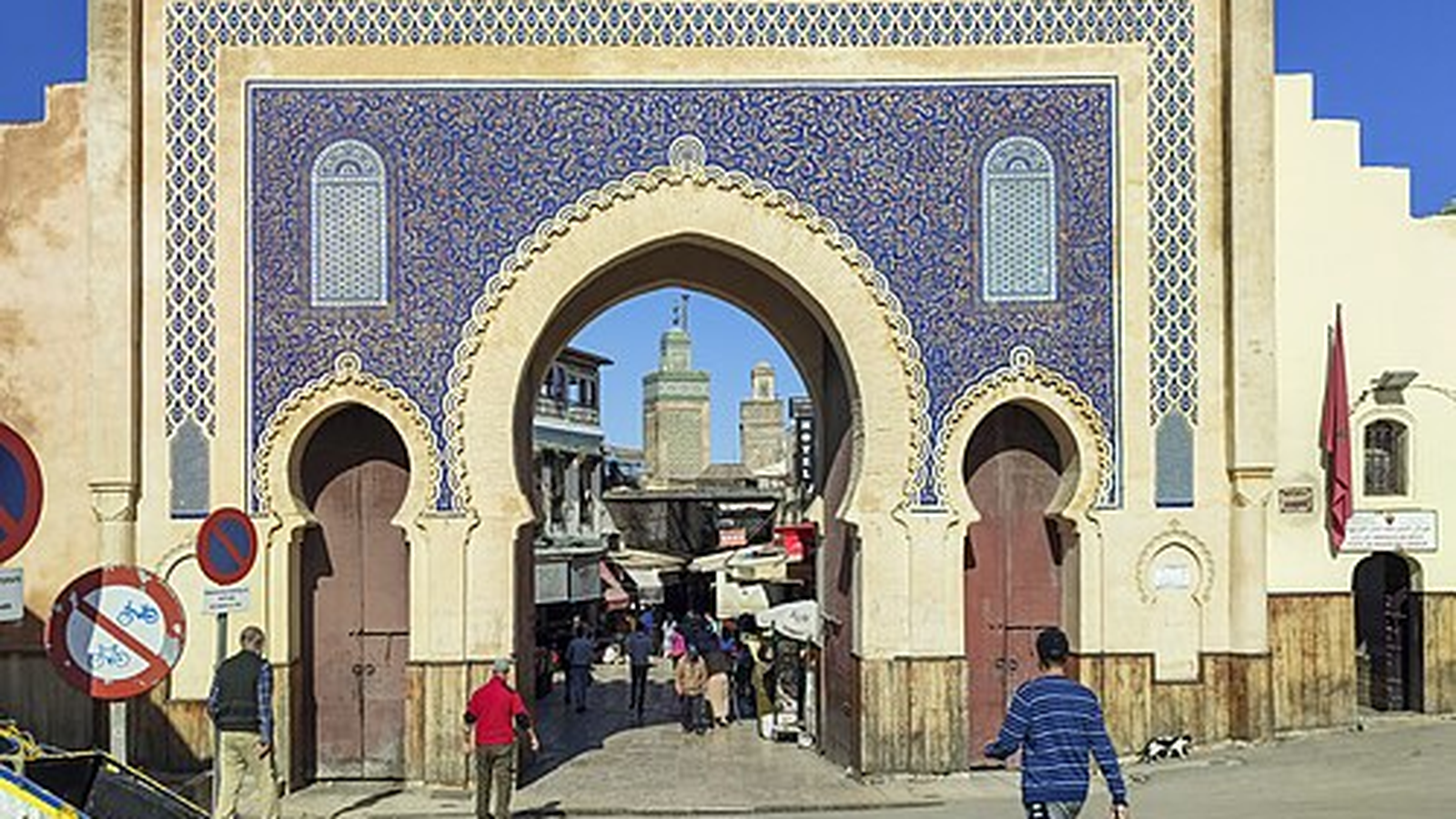
One side of Bab Bou Jeloud is blue. Pass through, and the inner façade turns greenish, both sides patterned with polychrome tiles, arabesques, and Moroccan geometric designs. The gate offers a color change with a very definite address: it stands at the entrance to a city of districts whose details shift as you move between them. In the Jewish quarter, Rue Boukhessissat—also called Rue des Mérinides—runs between the Upper Jewish quarter and the Royal Palace walls. It was created in 1924; Rue des Mérinides continues east past Bab Semmarine. The neighborhood’s synagogue history ranges from former rooms in private homes to larger interiors decorated with zellij, carved stucco, and painted wooden ceilings. At Bab Segma Cemetery, outlines of basins remain on the former Mosara Garden site. Fes gives you a tiled gate, a palace-side street, and a garden’s traces beneath a cemetery.
At a Glance
Fes has two historic districts linked by a junction, a river, and roads that do not all behave alike. Start in Fes el-Jdid: the Old Mechouar opens east toward Place Bou Jeloud and Old Fes, while its west-side gateway leads toward the Moulay Abdallah quarter along a winding road past the Grand Mosque of Fes el-Jdid. Across the Fes River, the Andalusian Quarter lies east and the Qarawiyyin Quarter west. Bab Bou Jeloud marks the main western entrance to Old Fes, where car traffic generally stops short of the historic city. Summer festival visits suit travelers drawn to that calendar; July and August daytime maximum temperatures average 35.1 °C.
Why Visit
A shrine in the heart of Old Fes contains the tomb of Idris II. The Zawiya of Moulay Idris II is a religious complex, and its place in the old medina puts a named shrine among the city’s central landmarks. Bab Mahrouk offers a different kind of encounter: it is one of Fes’s historically important entrances, while nearby Bab Bou Jeloud is more famous today. The better-known gate does not get the only line in the story; the older entrance has its own name.
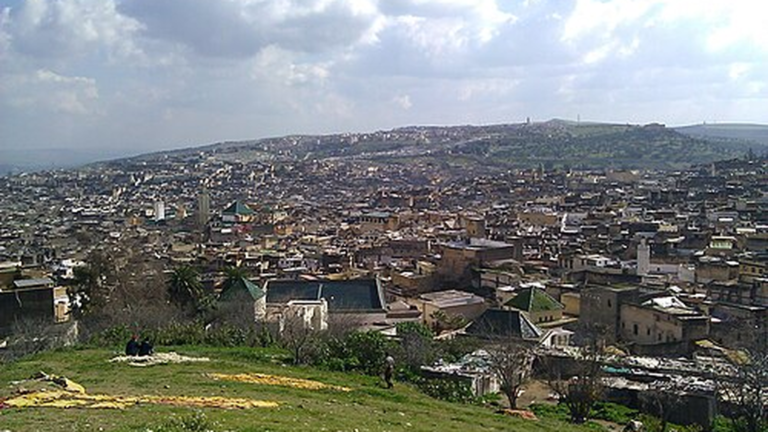
In the Jewish quarter, the Ibn Danan Synagogue is believed to date from the end of the 17th century, referring to its establishment at this location rather than proving the present building is that old. The Dar Batha Museum brings another former royal palace into the itinerary; it became a museum in 1916. The Nejjarine Museum turns to wooden arts and crafts and has a rooftop café. Then there are the Merenid Tombs, on a hill with panoramic views over the medina and wider city; as of 2026, the ruins were described as closed for reconstruction. The view and the tombs are separate parts of that stop.
Understanding the Destination
A market street can shrink without moving. In the Jewish quarter, shops and houses progressively narrowed the district’s main market street; later, the western end became accessible to pedestrians after Alaouites Square (Place du Commerce) was created behind Bab al-Amer. The walk carries both changes: buildings pressing inward, then a new opening at the street’s end. Between New Fez (Fes Jdid) and Old Fes, Jnan Sbil Garden marks a different kind of boundary. Sultan Moulay Hassan I created it as a royal park and garden in the 19th century. North of Fes el-Jdid and the royal palace, the Mosara Garden was created in 1287, with water supplied through a large noria. It later fell into ruin and disappeared as a functioning garden; the royal landscape survives in the city’s history, not as an intact public garden. The palace’s role changed when the capital moved to Rabat, and Fes ceased to be Morocco’s center of power. A later city took shape during the French colonial period: the Church of Saint Francis of Assisi was built in 1928 and expanded in 1933. In the Jewish quarter, street-facing open balconies and more windows distinguish many houses from traditional homes elsewhere in Fez, though older Jewish quarter houses followed a more closed-off style. From the market street, the route between the districts runs past Jnan Sbil Garden.
Top Places and Experiences
A foundation inscription found during twentieth-century renovations names Dawud ibn Idris as founder of al-Qarawiyyin in 877 CE. Historians disagree about whether it originally belonged to this mosque. Local legend says Fatima used inherited wealth to buy property in Fez and lay the mosque’s foundations in 859 CE; the two accounts arrive at the same landmark by different routes.
Al-Qarawiyyin Mosque-University
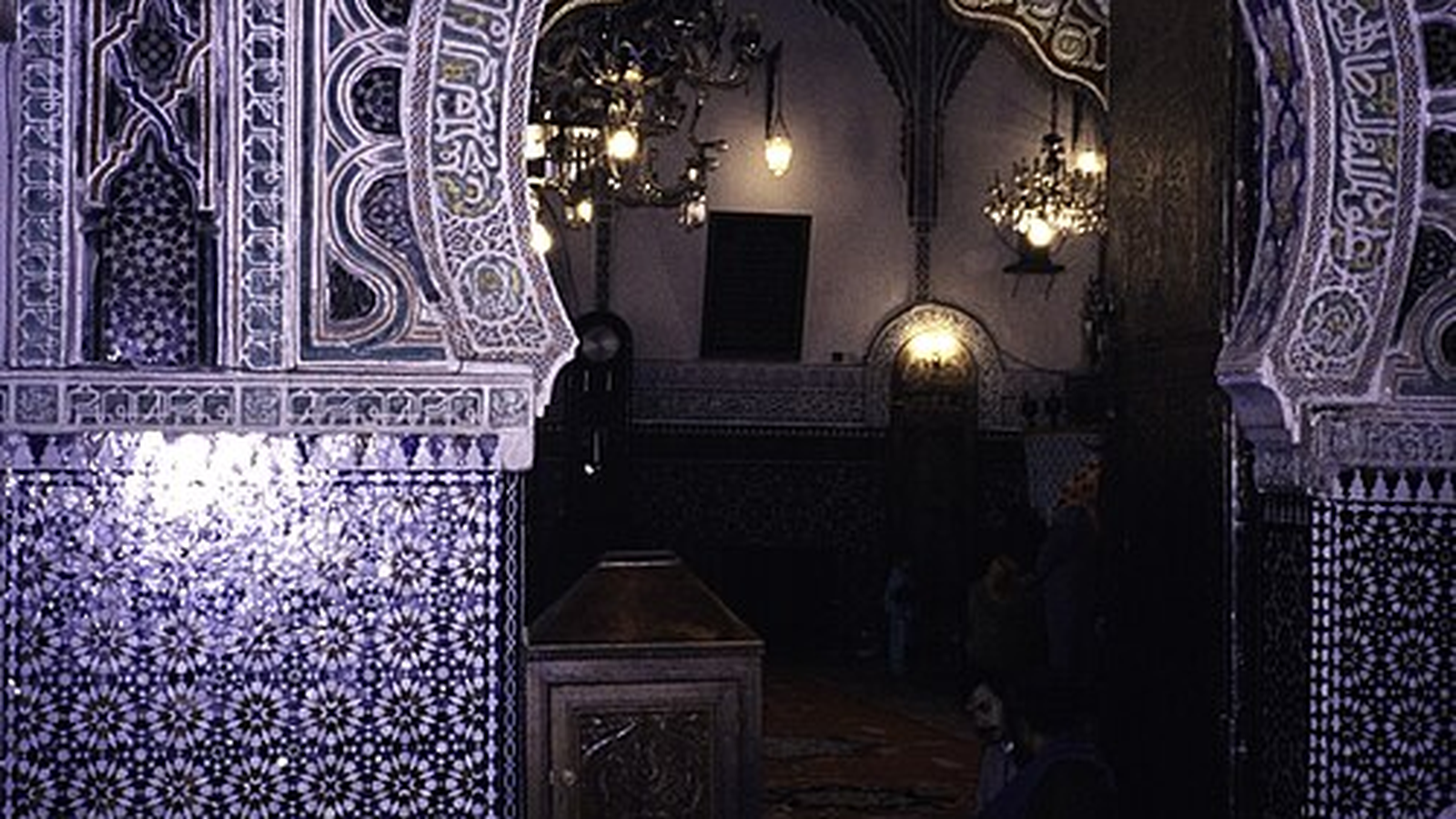
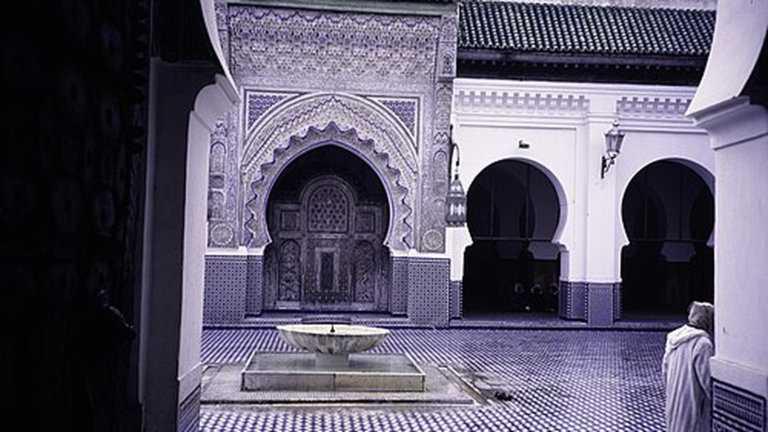
The mosque sits at the center of Fes el Bali’s historic landmarks, among mosques, madrasas, hammams, caravanserais, and residences. Its foundation stories make the first stop a double account of beginnings. Ian D. Morris says there is no empirical evidence that Fatima founded the al-Qarawiyyin library.
The story: Two sisters, two mosques: Fatima built al-Qarawiyyin, the traditional account says, while Maryam built al-Andalusiyyin.
Chouara Tannery
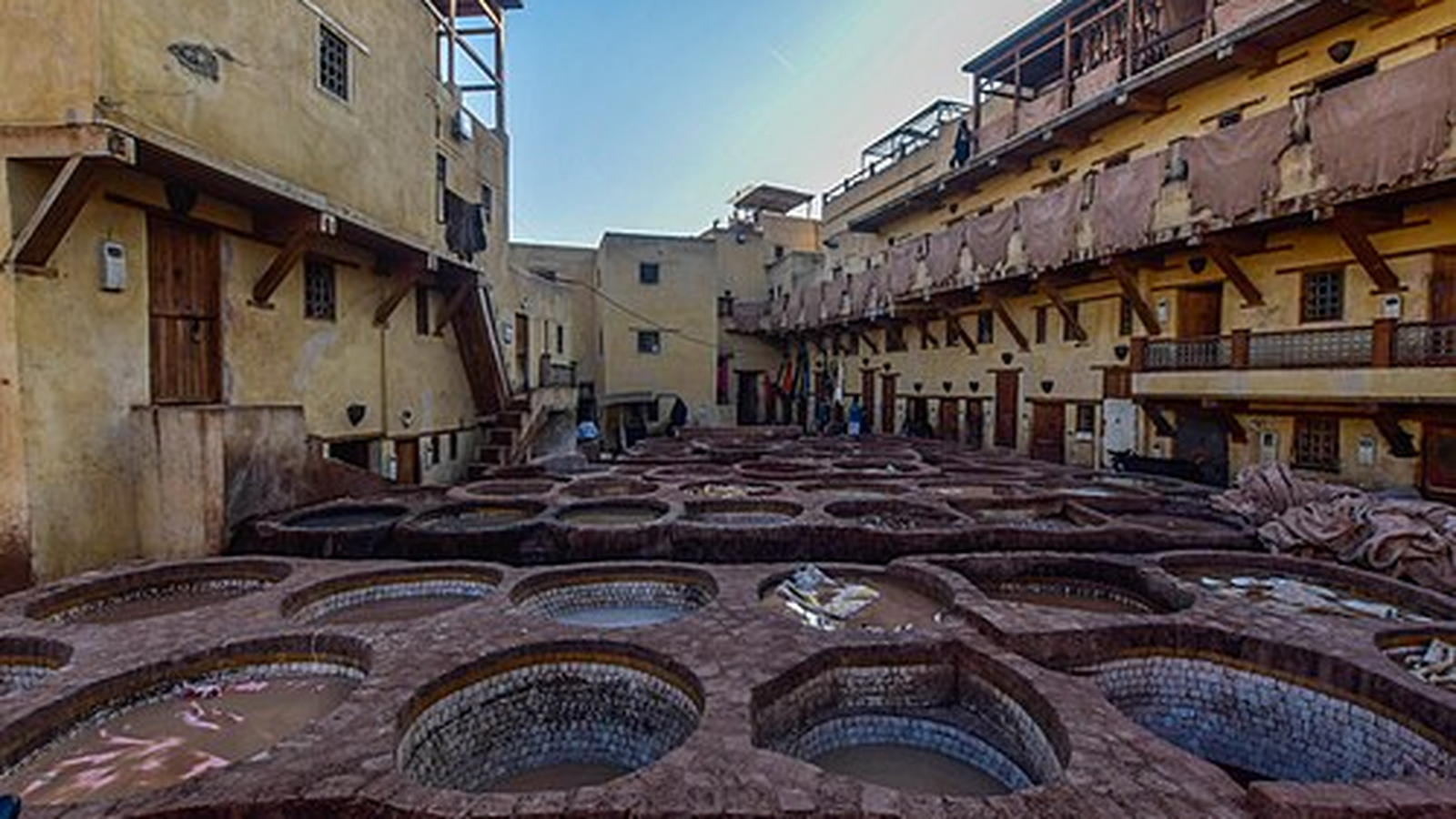
Tanning has operated in Fez since the city’s foundation, and Chouara is among its major visitor attractions. Arrive early, before the sun reaches the tannery and the smell sets in. Chouara Tannery is near the Saffarin Madrasa along the river and is the largest of Fez's three tanneries.
Bou Inania Madrasa
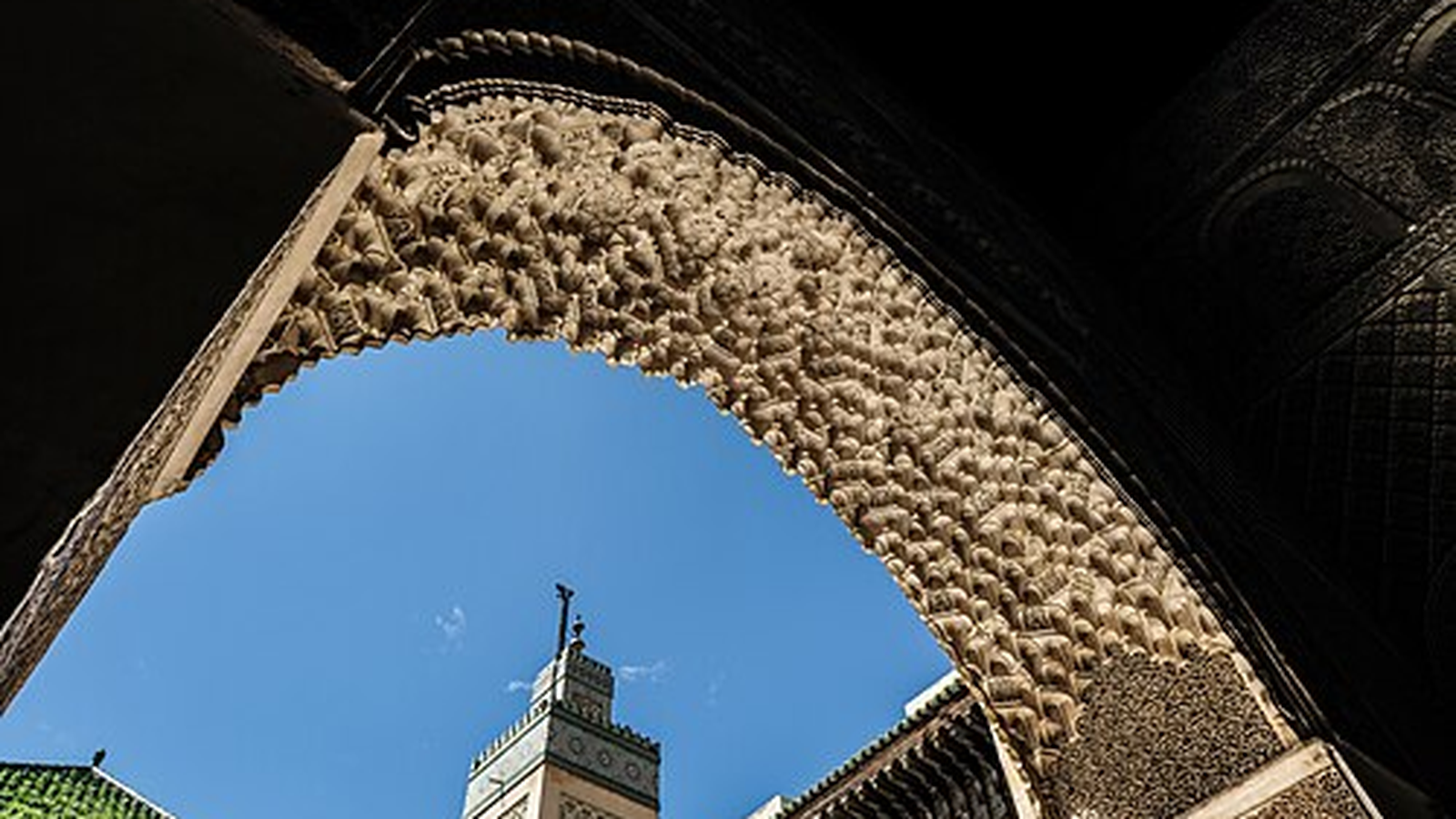
The Marinids built Bou Inania among Morocco’s first true madrasas. A guide listing gives hours of 09:00–18:00 and admission of 20 د.م. (≈$2); confirm current prices before visiting. The Bou Inania Madrasa was built by Marinid ruler Abu Inan Faris.
Bab Boujeloud
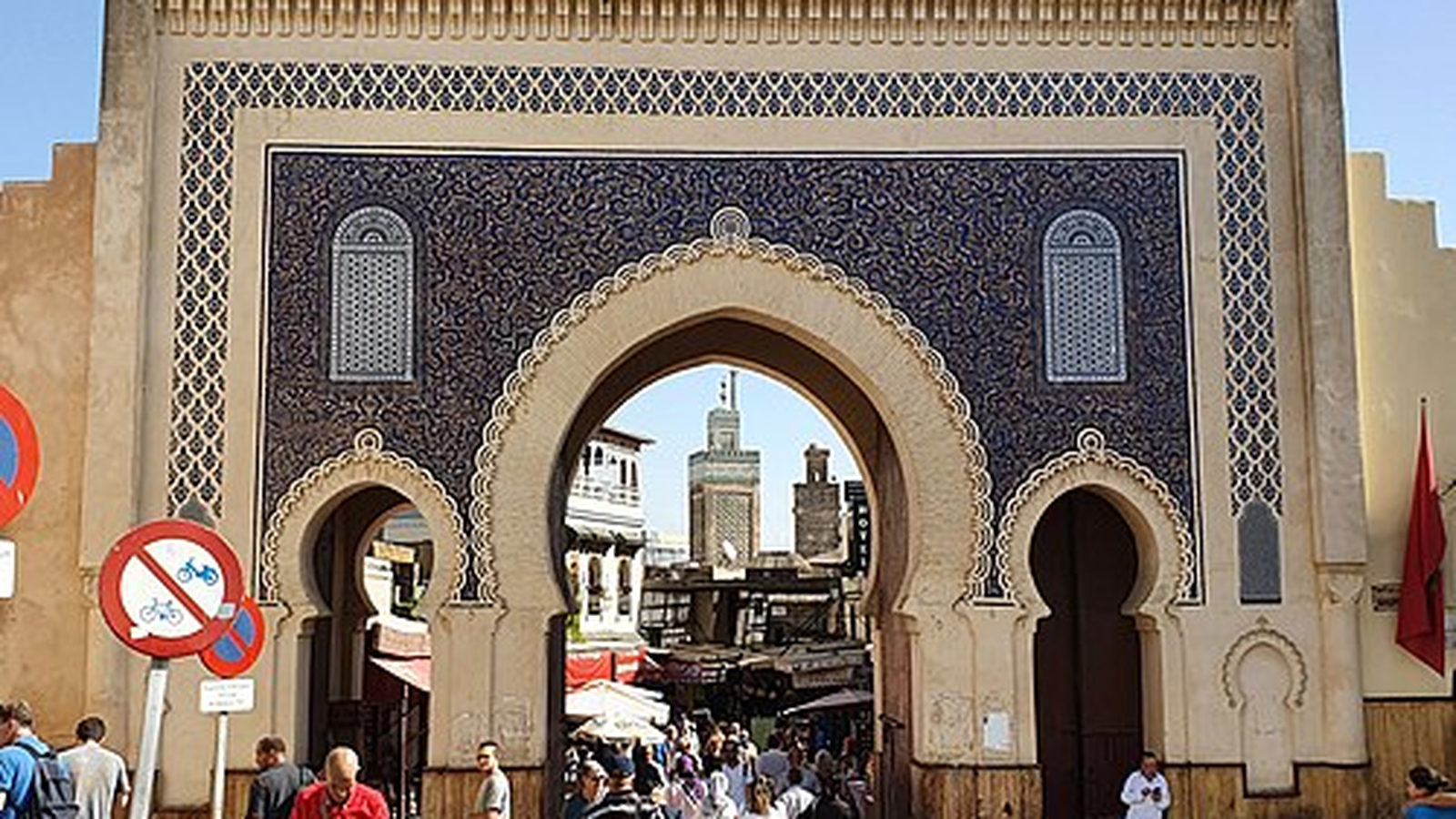
Use the gate area as a starting point for inexpensive medina food: budget options are difficult to find elsewhere, and some stalls sit near Place R’cif. La Kasbah de Fes serves Moroccan staples, including vegetarian tagine, and has rooftop terraces. Bouanania near Bab Boujeloud serves tagine, couscous, and other staples; listed meals cost around 40 dirham, with prices said to be negotiable down to 25 dirham.
The story: Bab Bou Jeloud changes color as you pass through: blue dominates the outer façade, greenish tones the inner one, and both sides carry polychrome tiles with arabesques…
Getting in: Bab Bou Jeloud marks the main western entrance to Old Fes; car traffic generally cannot continue beyond the gate into the historic city.
Eat near: For a lower-cost meal, compare restaurant prices with street food: inexpensive options are concentrated around Bab Boujeloud, with some stalls near Place R’cif.
Insider: From Fès-Ville station, ask a petit-taxi driver to use the meter for the ride to Bab Boujeloud, the medina’s main gate; the fare is about 20 د.م.
Old Fes (Local name: فاس البالي)
Fes el Bali gathers the Qarawiyyin Mosque-University and Chouara Tannery with numerous madrasas, hammams, caravanserais, and residences. Set aside time to move among its concentrated historic landmarks. Jnan Sbil Gardens were built within the walled corridor connecting Fes Jdid and Fes el-Bali.
The story: Across Old Fes and Fes el-Jdid, the dates run from a possibly 12th-century gate to buildings raised under an 18th-century sultan.
Getting in: The river divides Fes el Bali into two quarters: Qarawiyyin on the west bank, the Andalusian Quarter on the east.
Look for: At the city’s northern edge, another defensive layer appears in the walls of Old Fes, rebuilt during the Almohad period in the 12th and 13th centuries.
Insider: The medina’s winding heart can leave you unsure which way out is which.
Zawiya of Moulay Idris II
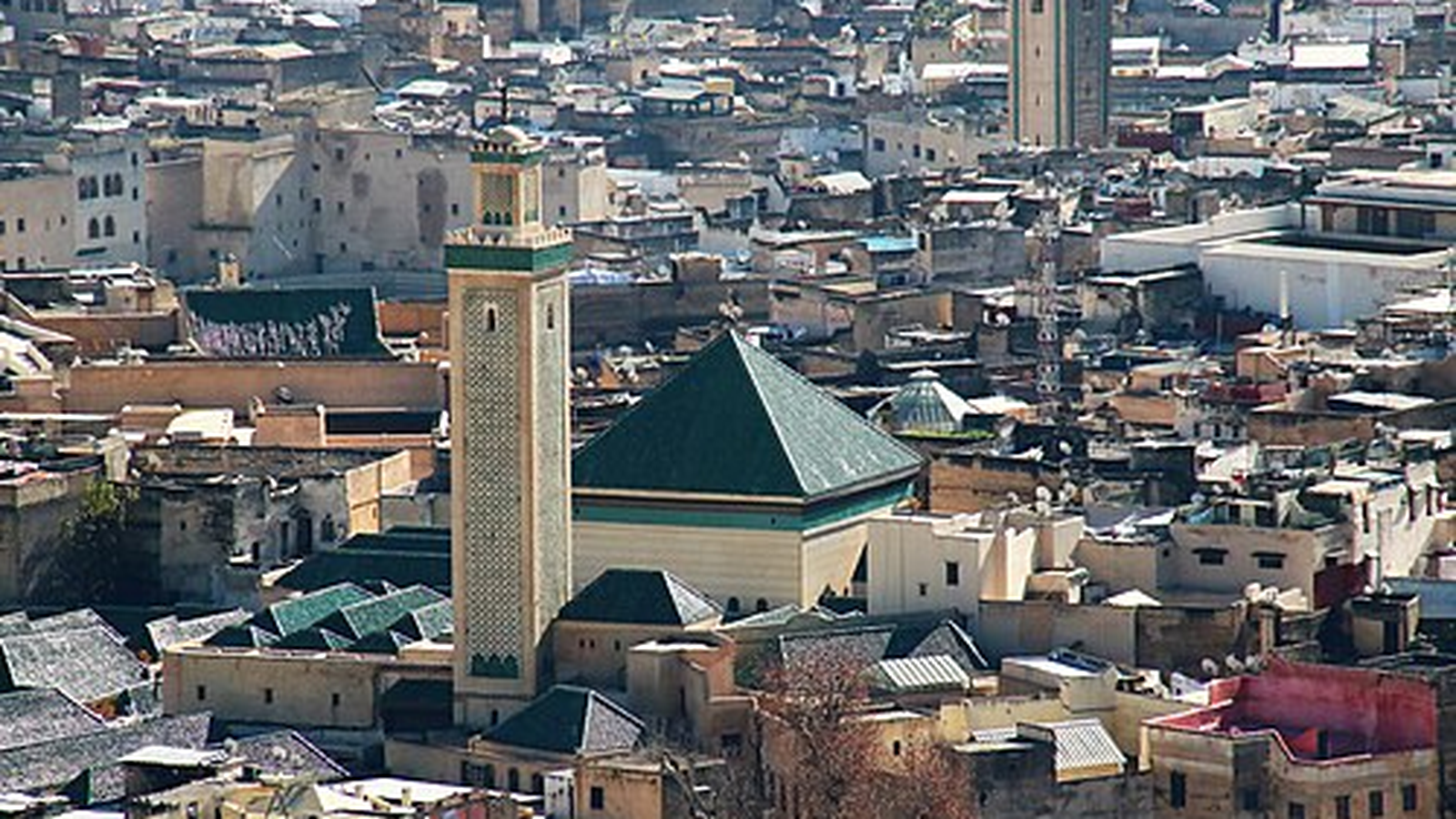
A debated account links the transfer of Jewish residents to the Jewish quarter (Mellah) with the rediscovery of Idris II’s body in 1437 and the creation of a sanctuary around the mosque. Treat that as one historical explanation, not a settled account. The historic medina contains major religious sites, including the Qarawiyyin complex and the Zawiya of Moulay Idris II.
The story: The Zawiya of Moulay Idris II is a religious complex, and its place in the old medina puts a named shrine among the city’s central landmarks.
Getting in: For a walk toward the Qarawiyyin, Zawiya of Moulay Idris II, or Mosque of the Andalusians, use the main souk streets as your broad bearings; branching residential lanes are not the same routes.
Before You Visit Preview
The first route decision begins before the medina: Fes-Saïs Airport sits roughly 15 km south of Fes el-Bali. Inside the old city, Place R'cif is reached by the major road that follows the Fez River and admits public transportation and emergency vehicles. One road; a useful arrival point to know.
- Use the Fez River to orient yourself: the Andalusian Quarter is on its eastern shore, and the Qarawiyyin Quarter is on its western shore.
- In Fes el-Jdid, Grande Rue de Fès el-Jdid runs from Bab Semmarine to the Old Mechouar, with shops and markets along the way.
- From the west side of the Old Mechouar, a small gateway leads by winding road past the Grand Mosque of Fes el-Jdid toward the Moulay Abdallah quarter.
- The Royal Palace gates are visible to the public; the grounds are closed to visitors and remain in use when the King visits Fes.
Where to Stay
Your first morning can begin among the medina’s main sights, or with a taxi ride into it. Fez El Bali puts you near the principal tourist sights, and many local residences there operate as guesthouses. A stay in the new town means relying on taxis to reach the medina each day. Pick your address with that repeated journey in mind. Riad Jamai sits in a residential part of the medina, a good walk from the main attractions but near a gate for a short taxi ride to the busy medina. Everyday local amenities are nearby, and the area is described as tranquil. The Upper Jewish quarter centers on High Street (Derb al-Fouqi), among residences associated with the Jewish community’s bourgeoisie and upper class. South of Street of the Market (Derb al-Souq), the Lower Jewish quarter has denser, more convoluted lanes, including dead ends. Fez El Bali keeps the principal sights near; Riad Jamai trades that closeness for a residential setting.
Best Time to Visit
June turns the temperature up and the rain down. Fez has hot, dry summers from June through September, with average daily maximum temperatures reaching 35.1 °C in July and August. Plan daytime walks around that heat, and pack light clothing for the dry months. Summer also brings festivals: Fez is among the Moroccan cities recommended for a festival-focused visit, so July and August pair the hottest daytime conditions with the summer calendar. Winter changes the wardrobe. Conditions are relatively cool and wet, and frost is not uncommon; bring layers and clothing for rain if your dates fall in winter. The seasonal contrast is plain: summer is hotter and drier than winter, while winter is cooler and wetter. If midsummer heat suits your plans, Fez’s summer festivals offer a reason to travel then; if you prefer cooler days, winter brings lower temperatures along with rain and possible frost.
Getting There and Around
Fes-Saïs Airport sits roughly 15 km south of Old Fes, so arrival begins outside the old medina. Bab Bou Jeloud marks the main western entrance to Old Fes; car traffic generally cannot continue beyond the gate into the historic city. If you are arriving by car, treat the gate as the edge of the drive and the start of your route on foot. The medina has one major road entering from the south. It follows the Fes River (Fez River) to Place R'cif, where public transportation and emergency vehicles can enter. From Fes el-Jdid, the Old Mechouar gives you two distinct directions. Its eastern road leads to Place Bou Jeloud and onward to Old Fes. On the west side, a small gateway provides the main access to the Moulay Abdallah quarter; the winding road passes the Grand Mosque of Fes el-Jdid. The route bends before it reaches the mosque. Place R'cif, Bab Bou Jeloud, and the Old Mechouar mark three different points of entry into the city’s historic districts.
Don't Be That Tourist
A shout cuts across the lane: “Belek! Belek!” Step aside. A heavily loaded donkey may be coming through, and standing in its path is a poor place to negotiate your next turn. In crowded areas, keep your belongings secure against pickpocketing. If you’re exploring alone, use usual precautions, dress appropriately, and tell someone where you’re going and when you expect to return.
- Don’t assume tap water is safe to drink. Bring a bottle with a filter.
- Don’t treat a souk price as fixed. Rough guide prices put leather satchels at 200–400 د.م. (≈$20–40), drums at 30–150 د.م. (≈$3–15), and full-size tagine dishes at 10–20 د.م. (≈$1–2). Glazing or decoration adds about 10 د.م. (≈$1); compare offers and bargain.
- Solo women may encounter harassment in alleys. Plan your walks with that possibility in mind.
FAQ
Can you see the Royal Palace in Fes without expecting an interior visit?
The ornate gates are the palace’s main feature visible to the public; the grounds remain in use as a royal residence and are not open to visitors. Plan for an exterior stop, not a palace tour.
If you want to reach the Moulay Abdallah quarter from Fes el-Jdid, where do you start?
At the Old Mechouar, a small gateway on the west side leads toward the quarter. The road passes the Grand Mosque of Fes el-Jdid and winds along the way, so allow for a less direct walk.
Can a car take you through Bab Bou Jeloud into Old Fes?
Bab Bou Jeloud marks the main western entrance, but car traffic generally cannot continue beyond it into the historic city. Treat the gate as the edge of your drive and plan to continue on foot.
Does Old Fes’s World Heritage Site stop at the old walls?
No. The protected area includes the urban fabric and walls, plus a buffer zone outside them intended to preserve the site’s visual integrity. The heritage landscape extends beyond the wall line.