Your First Trip to Fes: What to Sort Out Before You Go
Plan your arrival around Fes el Bali’s car-free 300 hectares, check seasonal heat and rain, and choose between station and airport connections before you go.
Plan in Sixty Seconds
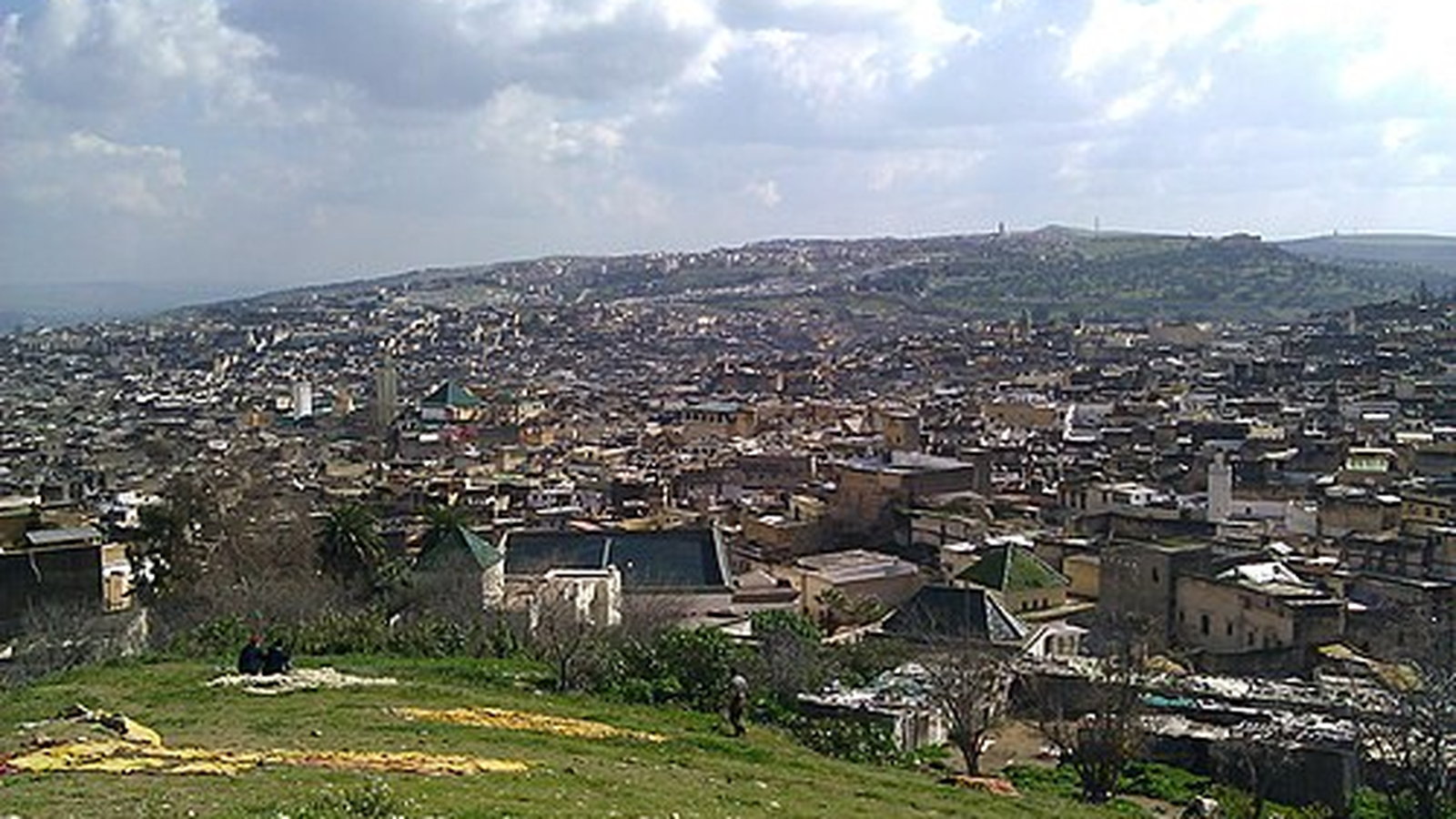
The souk streets run from the main gates toward Qarawiyyin, the Zawiya of Moulay Idris II, and the Mosque of the Andalusians. Use those main routes to orient a walk through the medina; branching residential lanes do not follow the same pattern. A few named landmarks give you more specific bearings, from Sidi Moussa Tannery west of the zawiya to a western entrance into the Jewish quarter.
- For the Jewish quarter, Alaouites Square (Place du Commerce) offers a western pedestrian entrance. The square was opened behind Bab al-Amer after 1912.
- Sidi Moussa Tannery lies west of the Zawiya of Moulay Idris II.
- A small gateway west of the Old Mechouar gives access to the Moulay Abdallah quarter by a winding road passing the Grand Mosque of Fes el-Jdid.
- Place R’cif is reached by a major road from the south that follows the Fes River and allows access for public transportation and emergency vehicles.
How Much Time You Need
A day in Ramadan can reach lunchtime with many places to eat closed. Hotels still serve food to visitors, so check Ramadan dates before you travel and plan daytime meals rather than counting on a restaurant being open. For a walking day, Bab Boujeloud gives you two named routes into Old Fes: Talaa Kbira runs toward the Kairouine Mosque, while Talaa Sghira starts at the same gate and later rejoins it. The streets give you a route to follow; the medina’s narrow, winding lanes can still make orientation difficult. Across in Fes el-Jdid, Bab Semmarine is the main southern gate. From there, a street passes through Sidi Bou Nafa’ toward Bab el-Mellah, the entrance to the Jewish quarter proper. The Fez Festival of World Sacred Music falls on varying dates from late May to September, so check the year’s dates before building your visit around it. The train-station bus connection to Place R’cif is another detail to settle when planning your arrival.
Where to Stay
A quieter residential stretch of the medina changes the first thing outside your door: at Riad Jamai, everyday local amenities are nearby, while the main attractions are a good walk away. The location is near a gate for a short taxi ride to the busy medina, so this base suits travelers who prefer a residential setting over immediate proximity to the sights. For a map reference, the Oued Bou Khrareb runs through Old Fes (Fes el-Bali), separating the Qarawiyyin quarter from the Andalusian quarter. Ain Azliten Tannery sits in the neighborhood of the same name on the old medina’s northern edge; its address gives you a specific northern landmark when comparing places to stay. Across in Fes el-Jdid, the main market street roughly divides the Jewish quarter (Mellah) into Upper and Lower sections, while Grande Rue runs beside residential neighborhoods organized around al-Hamra, Lalla ez-Zhar, and Lalla Ghriba mosques. The Royal Palace area also includes the New Mechouar and Dar al-Makina north of the palace entrance.
Getting There
Fes-Saïs Airport sits roughly 15 km south of Old Fes; the old medina is still ahead when you land. If you arrive by car, Bab Bou Jeloud marks the main western entrance, and car traffic generally cannot continue beyond the gate into the historic city. Plan to get out there and enter on foot: the car’s part of the journey has a clear endpoint.
- At the small square beyond Bab Bou Jeloud, Tala'a Kebira and Tala'a Seghira lead toward Qarawiyyin and the medina’s heart. Pick one as your starting street.
- Coming from the south, a major road follows the Fes River (Fez River) to Place R'cif, an access point for public transportation and emergency vehicles.
- At the Old Mechouar, take the road east toward Place Bou Jeloud and Old Fes. For the Moulay Abdallah quarter, use the small gateway on the west side; its winding road passes the Grand Mosque of Fes el-Jdid.
Getting Around
A winding road runs from a small gateway west of the Old Mechouar, passing the Grand Mosque of Fes el-Jdid on the way to the Moulay Abdallah quarter. Set out from the Old Mechouar for that approach; the mosque and quarter sit along the same route, though the road does not go straight. The square also connects east toward Place Bou Jeloud and Old Fes, so you can continue from Fes el-Jdid toward the old medina. Cars generally stop at Bab Bou Jeloud, the main western entrance to Old Fes; inside the historic city, walking takes over. For public transport access, Place R’cif is reached by a major road entering from the south and following the Fes River. That road also serves emergency vehicles, so keep vehicle access in mind when arranging a meeting point. At the Old Mechouar, the Royal Palace entrance is off-limits to the public; plan to view it from the square, then take the eastbound road toward Place Bou Jeloud.
What to Book Ahead
The sold-out sign is a poor companion to a Fes booking plan. Pack for the season instead: July and August daytime highs reach 35.1 °C, and Fez has hot, dry summers from June through September. Schedule outdoor walking around the heat.
- For a summer trip, Fez is among the Moroccan cities recommended for festival visits.
- Winter is relatively cool and wet, and frost is not uncommon; bring clothing for colder, wetter days.
The Right Season, the Right Hour
July and August average daily maximums reach 35.1 °C. Plan outdoor sightseeing around substantial midsummer heat: wear clothing suited to hot, dry days, and avoid building a long stretch of daytime walking into the schedule. Fez’s summers run hot and dry from June through September, with very little rainfall compared with winter. Summer festivals offer another reason to consider those months, though the temperature still sets the pace for time outdoors. Winter brings the opposite packing problem. Fez’s winters are relatively cool and wet, and frost is not uncommon, so bring layers and rain protection for outdoor plans. The seasonal pattern is clear: summer is hotter and drier; winter is cooler and wetter. Fes el Bali’s traditional streets and alleys are unsuitable for cars, leaving much of its approximately 300 hectares to explore on foot. In summer, schedule those walks with the daytime heat in mind; in winter, carry a layer for the cooler, wetter conditions.
What It Costs
A full-size tagine dish is listed at 10–20 د.م. (≈$1–2), with another 10 د.م. (≈$1) for glaze or decoration; check current prices. The shopping math climbs from there: drums are listed at 30–150 د.م. (≈$3–15), and leather satchels at 200–400 د.م. (≈$20–40). Treat those as rough reference points, not fixed prices; quality and bargaining affect what you pay. Carry cash and cards, with small-denomination cash for purchases and tips. A wallet full of large notes has limited range at a modest stall. If your trip falls during Morocco’s summer festival season, book accommodation well in advance and budget for higher prices. The leather satchel is the big-ticket item in this small shopping list; festival-season rooms are the larger expense to plan ahead for.
What to Wear (and Why It Matters)
In July and August, daytime highs in Fez average 35.1 °C; summer runs hot and dry from June through September. Pack light clothing for the heat, and plan outdoor walking for cooler parts of the day. Fes el-Bali is a large, old walled city and one of the world’s largest urban pedestrian zones, so bring comfortable walking shoes; a car will not carry you through the old quarter. Winter brings relatively cool, wet conditions, and frost is not uncommon. Pack a warm layer and rain protection for winter visits—the suitcase needs two different answers depending on the season.
Accessibility and Mobility
Uneven roads are part of the walk. Wear comfortable footwear suited to them, and plan for Old Fes as a pedestrian district across roughly 300 hectares. The old walled city is one of the world’s largest urban pedestrian zones, so a mobility plan that depends on reaching each stop by vehicle will not fit the streets. At the Old Mechouar, you can view the Royal Palace entrance from the square, but the grounds are closed to the public. Build your days around walking and public-facing sites.
The Unwritten Rules
Modest clothing is a practical choice for visits around Fes and other Moroccan cities and towns. Near Bab Boujeloud, Bouanania serves tagine, couscous, and other staples; listed meals cost around 40 د.م. (≈$4), so confirm the price before ordering. La Kasbah de Fes, also near the gate, serves inexpensive Moroccan staples, including vegetarian tagine, and has rooftop terraces. For a lower-cost meal, compare restaurant prices with street food: inexpensive options are concentrated around Bab Boujeloud, with some stalls near Place R’cif. Green signs mark trails for Andalusian palaces and gardens; orange signs point to walls and fortifications. Dress modestly, and use the colored signs as route cues.
First-Time Visitor Mistakes
The medina’s winding heart can leave you unsure which way out is which. Head downhill and you eventually reach Place R’cif, where buses and taxis are available. That broad cue can help when your bearings go; it is not turn-by-turn directions. From Fès-Ville station, ask a petit-taxi driver to use the meter for the ride to Bab Boujeloud, the medina’s main gate; the fare is about 20 د.م. (≈$2).
- At the train station, look for bus no. 19 on Rue Lalla Asmaa, outside the station—not inside. It runs to Place R’cif for 2.50 د.م. (≈$0.25), and no timetable is posted.
- At the airport, bus #16 goes to the main train station in about 40 minutes for 4 د.م. (≈$0.40). It runs roughly hourly from 06:00 to 23:00, but there is no timetable; allow for uncertain departures.
- A shared taxi from the airport bus stop has been listed at 10–20 د.م. (≈$1–2) per person, depending on negotiation, in April 2019. Treat that as a historical indication, not a fixed fare.
The Packing List That Matters
Put a rain layer on top of the packing pile; Fez’s winter conditions can include frost. Beyond Bab Bou Jeloud, a small square gives access to Tala'a Kebira and Tala'a Seghira, the main streets leading toward Qarawiyyin and the heart of the medina.
- Winter: pack a rain layer for wet conditions.
- Winter: include warm layers for cool weather and possible frost.
- Summer: bring clothes suited to hot, dry conditions from June through September.
- For July and August, plan clothing and outdoor time around average daily maximums of 35.1 °C.
- Keep the season in mind when choosing what to carry on the main streets toward Qarawiyyin.
FAQ
Can you go inside Royal Palace or the Agdal gardens during a visit to Fes?
No. The Royal Palace entrance at the Old Mechouar is off-limits, and the Agdal gardens beyond Bab Bou Jat Mechouar are also closed to the public. Plan to see public-facing sites around the palace perimeter instead.
Can a taxi take you through Old Fes to your destination?
Plan on walking for much of the old medina: its traditional streets and alleys are unsuitable for cars, across an area of about 300 hectares. Arrange to meet at an accessible point, then continue on foot.
Where should you meet someone arriving by public transport in the medina?
Place R’cif is reached by a major road entering from the south and following the Fes River; that road allows public-transport and emergency-vehicle access. Use the square as your meeting point, then set off on foot.
Can you extend a walk from the Old Mechouar to the Grand Mosque of Fes el-Jdid?
Yes. A small gateway on the square’s west side leads toward the Moulay Abdallah quarter along a winding road that passes the mosque. The road east from the Old Mechouar reaches Place Bou Jeloud and Old Fes.